Saturday, 19 November 2022

What do you wish you knew a year ago about the best B2B website for agriculture in India?


Every company needs a website. However, not all websites are the same. Many are built and developed with little knowledge of how people use websites to make purchasing decisions. In reality, the design of your website can have a significant impact on your business, for better or for worse.


In this piece, we'll look at a specific group of B2B websites: those that advertise service firms, particularly those that rely on their knowledge, reputation, and trust to succeed. Having said that, most of these recommendations apply to any business website. Let's start by defining our words.


Business-to-business websites


A B2B (or business-to-business) website is designed for companies that sell goods or services to other businesses.


They differ from websites aimed at individual consumers (B2C, or business-to-consumer websites) or government agencies (B2G, or business-to-government websites).


Expertise-Based Services Meet the Business-to-Business Website


Many of our readers are from the professional services industry, where expertise is the product. From legal and accounting to construction, consulting, and technological services, the firm's professionals' knowledge and experience make all the difference. In reality, when combined with experience, most B2B products and services become significantly more valuable.


However, marketing knowledge is not the same as promoting an actual product. The issue is that many individuals need to see a company's expertise before they believe the hype. They've been burned in the past by B2B enterprises that failed to deliver on their promises. Furthermore, professional services organizations frequently struggle to articulate how they distinguish or outperform similar-looking competitors.


The Most Effective B2B Website Strategies


Of course, no single website strategy is appropriate for all businesses. However, there are a few tactics that are prevalent across B2B websites. These approaches are not mutually exclusive and are frequently combined.


1) Products and services should be cataloged- Provide detailed product and service descriptions so that buyers can educate themselves about your offerings and reduce the sales cycle. Use the website to allow your clients or customers to directly perform business transactions using e-commerce capability.


2) Provide a brief description of your company- Potential purchasers want to know who they're working with and what sets you apart from the competition. Consider this one of your differentiators, or unique selling propositions. This role is more important in the B2B scenario (compared to a B2C situation).


3) Hub for Content Marketing-Content marketing (also known as thought leadership marketing) is a critical component of expertise-driven products and services. It is a method of making intangible skills apparent. When that material "lives" on your website, it is often most successful.


4) Lead generation- Websites are frequently an excellent way for businesses to obtain new business leads. This tactic is frequently paired with the above-mentioned content marketing approach to produce a stream.


10 Steps to Creating a B2B Website


1. Begin with a conscious business strategy


Every website should have a set of goals that complement your overall business plan. You should be able to determine the most critical business priorities. For instance, if your website assists you, Can you generate leads by providing relevant and appealing content?

How do you find and retain outstanding talent?

Using compelling offers, can you move consumers through the sales funnel?


2. Perform audience research


Who is your target audience? Prospective clients, potential workers, and reference sources are all popular B2B audiences. What is essential to them now? You may believe you know something, but only research will reveal the reality. Companies that conduct research on their target consumers, in my experience, inevitably discover a handful of insights that they can immediately apply to their business.


3. Create a sitemap and key functionality


What functionality will you require and how will your information be organised? To figure this out, take into account everything you've learnt so far about your approach and your target market. Consider why and how you want your site navigation and what aspects you want to present on different pages as you make decisions.


4. You create the look and feel of your website


The homepage is frequently the most aesthetically complicated page on the site, so most designers start there. Then you'll go through the process of carrying the appearance across all page types. Colours, typefaces, graphics, animations, layout, headlines, and offer copy, to mention a few, will all need to be evaluated.


5. Create a website copy


If you're wise, you'll write some of your text during the design phase, especially short portions like headlines. It can be difficult to assess a design without the actual copy. It can be difficult to judge a photograph when the accompanying title reads, "Stunning, attention-getting headline goes here."


6. Make the website


The term "develop" has a specific connotation in this context. I'm referring to the process of converting static graphic designs into fully functional websites. This process is normally carried out on a separate development server that is inaccessible to the rest of the world, but you may be granted privileged access to it during the next step (quality control), and possibly earlier.


7. Quality control and debugging


Websites are sophisticated organisms, and every site has a slew of flaws at this point. Don't be surprised or discouraged; they are unavoidable. You should visit every page on the site and click on every link at least a couple of weeks before the launch. Keep an eye out for visual flaws, code mistakes, and other issues.


8. Training


Almost every modern website is built on a content management system (CMS), which makes adding, editing, and removing information simple. While the most popular CMS platforms (such as WordPress, Drupal, and Joomla, to mention a few) are generally easy to use, they come with a plethora of functionality and settings.


9. Debut the new website


To keep the team engaged and moving forward, some organisations set a launch date at the start of the redesign process. Others choose to wait until later in the process to choose a date so that they can explore additional alternatives and smooth off any rough edges.


10. Optimization and Marketing


After the new site has been up and running for a few days, you may wish to send an email to your clients and prospects to let them know about it. Use social media to promote the site. You could even issue a press release. Take advantage of this opportunity to highlight a few noteworthy aspects.


Conclusion


Your website's content is only as good as it is. Your website cannot function without the proper business website content. It cannot adequately expose your brand, products, and services to prospective audiences and convert them into paying consumers. Strategic B2B website content is critical, but we've seen far too many organisations rush through the process and neglect its importance. This is a blunder. For more information on this subject, please contact Kisaan Trade.

An Introduction to India's B2B Agriculture Directory Platform


Kisaan Trade is an Indian agricultural directory online. It offers the best farm information and agribusiness market data for manufacturers, distributors, exporters, and suppliers. It is a highly valuable B2B portal for Indian farmers, agribusiness producers, and exporters.


It is a fantastic B2B Agriculture Business Directory portal in India. It provides 100% verified agricultural business India suppliers and manufacturers. We are doing everything we can to provide you with good suppliers and dealer distributors to help you promote your business. To help you build your business, we will connect you with manufacturers of seeds, pesticides, fertilisers, bio goods, agricultural machinery, nurseries, and so on. Tt is in the farm directory business and promotes their advertisements all over the world.


Kisaan Trade is constantly looking for new business options for their advertisers. India is an agricultural country, and agricultural and farming enterprises employ a considerable portion of the Indian people. It is an excellent venue for learning about farming commercials in India. It diversified in the agribusiness market with its technological team, which always believed in promoting its sponsors and providing them with the best possible benefits.


Why Kisaan Trade B2B Ecommerce Solutions?


Expand your business with the most adaptable B2B ecommerce platform built for B2B, D2C, and Omnichannel transactions.


1) Headless Business


Using the decoupled headless architecture, create personalised buyer journeys for new-age buyers. Using 250+ API endpoints, you may create custom, one-of-a-kind, smart, and efficient wholesale solutions. Integrate with your preferred ERP, CRM, POS, accounting software, and so on.


2) Labeling in white


By selecting for white-labelling for your B2B ecommerce platform, you may improve your B2B branding and provide an effective value chain to your clients. Use your brand name and logo in both the frontend and backend of your B2B website. To achieve a greater ROI from your marketing efforts, brand all of your communication and notification methods with your logo.


3) MACH Structure


Choose out-of-the-box B2B ecommerce solutions that leverage the power, flexibility, agility, and speed of MACH (Microservices, API-first, Cloud-Native, Headless) ecommerce architecture. Using the MACH architecture, you can quickly build and grow B2B ecommerce solutions for large-scale organisations without disrupting your present business model or operations.


4) Marketplace with Multiple Vendors


Give your wholesale firm a competitive advantage by bringing together B2B customers and sellers on your multi vendor platform. With simple tools, you can onboard several vendors and manage their products, orders, payouts, and commissions. As suppliers on your B2B marketplace, use, engage, and leverage your existing dealer network.


5) Multi-Store Administration


Set up and administer a network of several storefronts for your B2B ecommerce business (location-based, product line-based, customer segment-based, etc.). Customize each storefront for individual users with distinct URLs, themes, inventory, pricing, discounts, checkout choices, shipping, and so on. Control all of your stores and their activities from a single admin panel.


6) Speak Your Dealers' Language


65% of B2B e-commerce buyers prefer native language content. Convert your wholesale website to different languages to better interact with domestic and international buyers. Get full support for RTL languages such as Arabic, Hebrew, and others for both static and dynamic content. Use the power of language-specific content to improve marketing and conversion rates.


7) Price Variation


With an inbuilt pricing overrides functionality, you may offer customizable multi pricing based on customer login on your B2B site. Improve your cost management and profit margins by offering various customers specific prices based on their order volume, order frequency, geolocation, or any other factor. Allow multi-currency checkouts on your B2B website to improve international conversions.


8) Form Creator


Use a range of built-in or custom forms to collect information from your B2B customers. Set up dynamic forms as needed to speed up your company processes, obtain new information and insights into customer/user requirements, and boost your marketing ROI. To keep all parties informed about form submissions, customize your forms with particular field types and activate alerts on all forms.


9) RFQ (Request For Quotation)


Make your B2B sales cycle speedier and more conversion-oriented by better organising your quotes with an integrated RFQ capability. Automatically execute diverse RFQs by assigning them to the appropriate vendors on your B2B marketplace. Allow your wholesale buyers to compare, accept, reject, and choose among the best RFQ responses provided by the sellers to make better purchasing judgments.


10) Processing of Bulk Orders


Bulk order processing saves time and makes your B2B ecommerce business procedures more efficient and error-free. Instead of performing repetitive manual processing, utilise one-click bulk order processing to handle hundreds of orders at once.


Kisaan Trade is here to help you with any services you require and to answer any questions you may have about this blog.

Friday, 18 November 2022

The obvious advantages of utilising Kisaan Helpline Products Bio NPK for your crops


What is the distinction between macronutrients and micronutrients?


Plants cannot grow in the absence of vital plant nutrients. Plants require nutrients in addition to carbon dioxide (CO2) and water (H2O) to grow and produce biomass. There are fourteen essential plant nutrients recognised, and macro and micronutrients are separated based on the quantity of nutrients required by plants. Macronutrients are taken up at relatively significant levels (10–100 kg or more per hectare), whereas micronutrients are typically confined to a few grams per hectare.


The significance of organic manures


1. Organic manure bonds soil particles into aggregates, which are structural units. These aggregates aid in the preservation of a loose, open, granular state. Water percolates and infiltrates more easily. Soil granularity maintains optimum aeration and permeability conditions.

2. Organic matter increases water-holding capacity. In sandy and loamy soils, organic matter undoubtedly increases the amount of accessible water. Furthermore, granular soil created by organic matter additions holds more water than sticky and impermeable soil.

3. Organic matter reduces surface runoff and erosion due to effective infiltration.

4. Organic matter or organic manure on the soil surface minimizes soil erosion caused by wind.

5. Surface mulching with coarse organic matter cools the soil in the summer and keeps it warm in the winter.

6. Organic matter provides energy for the growth of soil microbes.


What is N, P, and K, and why are they so vital to plants and crops?


N, P, and K are the nutrients that crops require in the greatest quantities. As a result, they are frequently regarded as the most vital nutrients.


What role do these nutrients have in plant growth?


The primary functions of N and P are that they are components of proteins and nucleic acids, both of which are essential components of plant tissue. K is the sole nutrient that is not found in organic plant components but is essential for the regulation of plant processes such as osmosis and enzyme activity. In general, K is vital for the quality of harvested plant products.


Why is it critical for farmers to understand the NPK level of their soil?


A suitable number of nutrients should be present in the crop's root zone for optimal growth. These nutrients can be given in part by the soil and should be supplemented in part with organic manures and fertilisers. Soils will have varying levels of accessible nutrients based on the parent material (e.g., sand, clay, peat) and variances in management history, such as previous crops, crop residue management, and previous use of manure and fertilisers. Variations in climatic conditions may also modify the available nutrients.


How do plants absorb these nutrients? Is there a difference between crops?


Nutrients are present in the soil in several forms that differ in their availability to plants. For example, most nitrogen in the soil is present in organic form as part of organic matter, whereas it can only be taken up in mineral forms (ammonium and nitrate). Before plant roots can absorb organic nitrogen, it must be mineralized into mineral forms. Phosphorus is found in organic debris as well, but it is often in chemical forms that range in solubility and plant availability. Potassium is mostly present in soil solution and is adsorbed to soil particles such as clay and organic matter, from which it can be easily desorbed by changes in temperature.


Crop roots absorb available nutrients from the top layer of soil. Despite variances in plant root systems that range from shallow (e.g., grass) to deep (e.g., most tree crops, sugar beet, maize, and cereals), all crops absorb nutrients from the top soil.


The mobility of nutrients in soils varies greatly; N and K dissolve easily in water and are quite mobile in soil, whereas P is somewhat stationary in soil. As a result, the supply of N and K to plant roots is often sufficient, given that the amount of soil is sufficient, whereas the supply of P to plant roots may be difficult, particularly in the early phases after sowing or planting.


What are the signs of a nutrient deficiency in plants?


A nutrient deficit will cause visual indications in the plant, such as yellowing leaves or the appearance of brown patches on the leaves. The precise symptoms depend on the nutrient's role in the plant and how it is delivered throughout the plant.


What is the Kisaan Helpline?


Kisaan Helpline, one of India's top agricultural service provider portals, supports rural communities in increasing the efficiency and sustainability of their agricultural operations. We assist farmers in being more connected, integrated, and knowledgeable than they have ever been. We provide specialist knowledge ranging from ground preparation, seeding, sowing, plant nutrition, protection, and harvesting. We are India's top Agricultural Service Provider, assisting you to make farm decisions and increase performance, forecast what will happen in the future, and respond more effectively as projected.

Roles played by agricultural events in a farmer's life


Agriculture is the backbone of the Indian economy. Agriculture has a tremendous impact on India's overall economic growth. India's agriculture industry accounts for 1% of the country's exports. The fairs provide a market for high-quality seeds, such as beans and groundnuts, that are not generally available through industrial sellers. Input trade fairs assist local agricultural retail companies and encourage them to expand their trade to more remote places, which benefits both them and farmers.


The community and the government fund several fairs and exhibitions to encourage people to network and learn new things. There are many events and festivals held by the government in order to keep our farmers up to date with the latest information and facilities, so these events play a major role in a farmer’s life.


What Do Farmers Stand to Gain from the Fair?


Promotion of goods, brands, and services at farmers' markets reaches a large potential market. The event provides an opportunity to network with consumers, potential dealers, and agencies. The fair displays and promotes valuable items and services. The farmers' market offers live demonstrations of the most recent concepts and technologies.


The major objective and purpose of this programme are to provide answers to critical concerns that farmers face and to increase knowledge about improved production practices, crop protection tactics, and post-harvest management approaches. The event brings together agri-professionals, policymakers, government representatives, like-minded individuals, and media from around India to discuss the agricultural business.


Fairs and festivals' role in agriculture and rural development


Festivals and special events are well-known for their importance in destination development as attractions, image builders, animators of static attractions, and catalysts for further developments. In addition to the economic benefit of increased tourism, festivals and special events extend the destination's tourist season, provide cultural and educational opportunities, foster a sense of community pride, help conserve sensitive natural, social, and cultural environments, and contribute to sustainable development.


Event and festival tourism is one of the fastest expanding segments of the tourist industry. It is gaining popularity in rural regions as a method of revitalizing local economies. According to the International Festival and Event Association (IFEA), the special events business is projected to have 4 to 5 million regularly recurring events and has a substantial economic impact.


The benefits of festivals and special events are more clearly illustrated in rural areas, notably in terms of improving local economies, sustaining employment, and promoting rural destinations.


 Increased expenditures:


• Creation of employment

• An increase in labour supply

• Increase in standard of living

• Increased awareness of the region as a travel and tourism destination

• Increased knowledge concerning the potential for investment and commercial activity in the region

• Creation of new accommodation and tourist attractions

• Increase in accessibility

• Construction of new facilities

• Improvement of local infrastructure

• Preservation of heritage

• permanent increase in local interest and participation in types of activities associated with the event(s)

• Strengthening of regional values and traditions

• Increased local pride and community spirit

• Increased awareness of non-local perceptions

• Enhanced international recognition of the region and its values

• Development of skills among planners


Upcoming agricultural events:


1) From Wednesday, September 21, to Friday, September 23, 2022

Globoil India, Agra


Join us at the Taj Convention Centre in Agra for the 25th edition of Globoil, the world's biggest edible oil and agro-trade conference and expo. As the global edible oil and agro-trade community prepares for this important chance to meet key industry decision-makers, Globoil India promises a flood of new services and innovations to address shifts in consumer demand. The fully scheduled event will once again welcome over 100 exhibitors displaying items from a variety of industry areas.


2) From Friday, October 7 to Sunday, October 9, 2022

Smart Urban Farming Expo (SUFex), Chandigarh


People are beginning to grow food in unconventional locations and areas all around the world. Urban farming has emerged as the next frontier in agriculture. With clever technology, urban farming may go everywhere, from modest communal vegetable gardens to delivering healthy food to customers in the surrounding neighborhoods. In metropolitan areas where enough space is scarce, urban farming may be a blessing to citizens and the general public. Recently, health concerns have shifted residents' attention to food safety, a healthy environment, and beautiful surroundings.


3) From Sunday, October 16 to Wednesday, October 19, 2022

Sugarcon & IAPSIT Sugar Conference & Sugar Tech Expo, Lucknow


The Sugarcon & IAPSIT Sugar Conference & Sugar Tech Expo will focus on Sustainability of the Sugar and Integrated Industries: Issues and Initiatives, providing a grand opportunity and a vibrant platform for all stakeholders from around the world, including researchers, technologists, extension officers, managers, industry officials, manufacturers, suppliers, policymakers, and progressive farmers, to share their perspectives and experiences on global issues.


About Kisaan Helpline


Kisaan Helpline is a specialised platform (agricultural supply chain) that offers farmers with one-stop information. Farmers may also access soil testing, training, crop protection, crop nutrition, seeds, agricultural news, publications, advice, and solutions from agricultural specialists. Farmers may get crop protection advice, solutions, publications, and information from agricultural specialists on the Agro Expert Forum of Helpline. The Kisan Helpline's goal is to have agriculture specialists and consultants, rather than keeping their opinions to themselves, share their knowledge with others and aid farmers by distributing their ideas, publications, and information about agriculture.


How may Kisaan Helpline use fairs to help farmers?


• to teach rural residents about farming;

• to teach rural residents about farming;

• to create a single platform for the agricultural industry and

• It is designed to disseminate current agricultural information to agri-professionals, policymakers, like-minded individuals, government officials, and media specialists.

• to improve technology that has the potential to double farmers' revenue.


Because conferences are held in various locations around the country, you will have the opportunity to travel widely, sample a variety of foods, and see a variety of landmarks. There may even be events taking place abroad that allow you to go and experience a completely different culture.


The Kisaan Helpline promotes farmer welfare in order to develop awareness for improved business practices. We are always here for you.

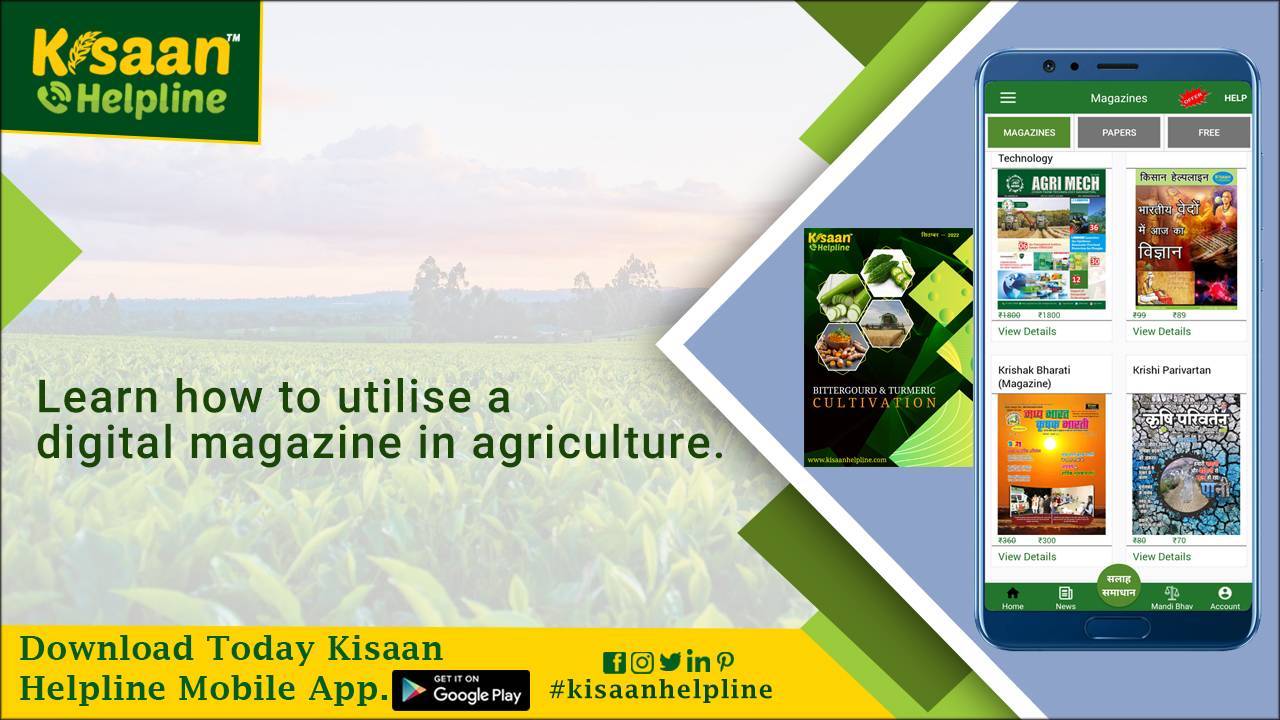
Learn how to utilise a digital magazine in agriculture


Magazines are an important source of information for keeping up with world developments. They do not offer daily news updates like newspapers do.


These communicate the message to us through text, graphics, and other media. Agriculture journals also serve a similar purpose. They keep readers up-to-date on the most recent technological advances from across the world. It is very crucial for our modern farmers to know the importance of a digital magazine in agriculture.


What exactly is an agricultural magazine?


The Agriculture Magazine is a monthly peer-reviewed, open-access journal that was founded with the goal of distributing knowledge about cutting-edge technology and practices developed in agriculture and associated sectors.


In addition to agriculture, it stresses environmental concerns because they are presently more relevant and demand agriculturalists' attention. This magazine provides a place for academics, scientists, students, forward-thinking and imaginative farmers, and any other members of the scientific community to contribute their unique ideas by publishing papers that meet both current and future requirements.


Let's take a look at why you should make a digital copy of your magazine right now.


1) Cost-cutting measures


A paper magazine must be printed, distributed, and sold by newsagents. Of course, these three procedures are not free. Furthermore, unsold magazine copies constitute a loss for the publisher.


Digital, on the other hand, enables publishers to distribute their publications over the internet without having to pay for the commercial mediation of suppliers and sellers.


Changing the company model, of course, necessitates an investment. At first, you may discover that the money you save by reducing distribution is entirely spent on organizing the new arrangement, such as the cost of software and the development of your personnel.


2) Global Distribution


Another advantage is that publishers no longer have to pay distributors and can be confident that their magazine will be distributed globally.


On the internet, there are no geographical boundaries or state borders. Every issue of an agriculture magazine is theoretically available to everyone on the planet. This indicates that the number of copies sold will most likely rise, resulting in more revenue for the corporation.


But it gets better: it's not just about money; it's also about marketing and business image. The ability to distribute the magazine all over the world is the foundation for a well-known, strong, and profitable brand—one that can also rely on word-of-mouth marketing.


3) Virality


Web 2.0 has created entirely new methods to communicate with consumers as well as with businesses and their customers. The opportunities for businesses are enormous, and nearly everyone has begun to use social media to boost their fame and attain their goals.


Nowadays, no publisher can imagine success without including social media in his or her plan. Websites like Facebook, Twitter, Instagram, and Pinterest may help you locate your target audience and increase the sharing of your articles.


It ultimately boils down to digital word-of-mouth marketing. If you provide a high-quality product, you can be confident that your viewers will like or share your article, video, or photo, increasing the visibility of your post.


4) Interaction


Readers on social media connect with one another through comments, favorites, and private messaging. However, they also make contact with your organization in the same manner.


This provides you with an excellent opportunity to solicit comments from your audience. Did they like your most recent issue or article? Do they share your point of view? Are you able to elicit feedback from your readers?


Answering all of these questions will help you determine whether your magazine is on the right track. Of course, selling a printed magazine can have the same impact, but you won't be able to fully grasp why people like or dislike it.


5) Advertisement Hosting


If you have a digital magazine, you will undoubtedly draw viewers to your website. As a result, you will be able to display advertisements connected to your sector or the issues you often deal with (native advertising).


You may quickly enhance your earnings by doing so. And if you're worried about bothering your readers, here's some good news: the digital world doesn't have room for boring, typical, unwelcome advertisements. Ads, on the other hand, are interactive and researched to truly engage the audience.


By placing the ad in the proper location on the web page, it will most likely appear like a suggestion from your magazine rather than a paid commercial.


The renowned agriculture periodicals are:


1) Agri Mechanics


It is a monthly journal on farm mechanisation and one of the leading periodicals in agricultural technology. RK MEDIA AND COMMUNICATIONS produces it in India and distributes it to key agricultural experts around the country in 15,000 physical copies and 350,000 internet readers globally.


2) India's Horticulture


It is a semi-technical English publication, published biweekly.


It was founded in 1956 with the goal of disseminating information on the most recent ways of cultivating fruits, vegetables, and flowers. Fruit, vegetable, floral, gardening, landscaping, plantation crops, and medicinal and aromatic plant cultivation are all included.


3) Today's Agriculture


Agriculture Today has remained successful throughout the years due to its broad content and unusual and eye-catching style of delivering critical information. The journal has evolved into a vital and ideal medium for spreading broad market and industry information; economic and policy problems; scientific breakthroughs; new agri-input items; new technology; and the most recent news and commentary on agricultural developments.


4) An Indian Farmer


Agriculture is the primary industry in rural India. Transferring scientific technologies and information to farmers and decision-makers must be high on the priority list. The Indian Farmer is a monthly journal that provides agricultural, veterinary medicine, home science, and fishing research. It has the ISSN number 2394-1227.


Concerning the Kisaan Helpline


Kisaan Helpline, one of India's leading websites for agricultural service providers, can help rural communities boost the productivity and sustainability of their agricultural operations. Farmers are encouraged to become more involved, connected, and knowledgeable. We offer specialised expertise ranging from soil preparation and planting to plant nutrition and protection. We are India's largest provider of agricultural services, assisting you in making farm decisions, enhancing performance, anticipating forthcoming events, and responding more successfully as expected.


Kisaan Helpline offers a variety of e-magazines in a variety of languages to help farmers learn more about farming.


To summarize


With digital technology, there is a lot of promise for enhancing agricultural livelihoods. The government must alter current laws to make Indian agriculture more market-oriented while also encouraging technological innovation. Rural connections are critical for supplying information and low-cost data. Fair market access will help farmers boost their profitability while also allowing rural kids to reach their full potential.


As a committed and dedicated digital platform to enhance farmer livelihoods and facilitate sustainable agriculture, Kisaan Helpline will be delighted to answer any questions you may have.