Tuesday, 21 March 2023

The Latest Trends and Innovations in Agriculture: Highlights from Industry Events


Food demand will increase by 70% by 2050 in line with the rapid population growth. According to a UN study, 9.9% of the world's population still experiences hunger, making the idea of providing food for almost 10 billion people a daunting task. Given how unpredictable environmental changes are, we must rely on advancements in agricultural technology.


Fortunately, the early indications are positive. We don't have to wait thirty years to see how future agricultural innovations will affect how people live their lives.


Continue reading to learn what agricultural technology and innovation to look out for in 2023. We'll look at the technologies that are transforming how produce is grown, transported, stored, and managed by farmers.


Here are some highlights from recent business gatherings showcasing the newest developments in agriculture:


1) Precision Agriculture: A key topic at recent agricultural events was the use of precision agriculture technologies like drones, sensors, and GPS mapping systems. These technologies can aid farmers in more accurate and efficient crop and soil condition monitoring, resulting in higher yields and lower costs.

2) Artificial Intelligence: To enhance decision-making and maximise crop yields, agriculture is using artificial intelligence (AI). Artificial intelligence (AI)-powered systems can analyse data from various sources, such as soil sensors and weather forecasts, to offer farmers tailored crop management recommendations.

3) Plant-Based Proteins: Plant-based proteins are in higher demand as a result of the trend towards plant-based diets. This has given farmers new chances to grow crops like soybeans, peas, and lentils, which are used to produce products with plant-based proteins.

4) Vertical Farming: Growing in popularity as a way to boost crop yields and lessen agriculture's impact on the environment is vertical farming, which involves growing crops in stacked layers under artificial lighting and climate control.

5) Biostimulants: Substances used to promote plant growth and increase crop yields are known as biostimulants. The growing interest in biostimulants, which can be used in conjunction with other crop management strategies to improve plant health and resilience, has been brought to light by recent agricultural events.

6) Sustainable Agriculture: Agriculture is focusing more and more on sustainability. The use of renewable energy sources, precision irrigation systems, and other new methods and technologies that can help farmers lessen their environmental impact have been highlighted at numerous agriculture events.


The top ten global agriculture and farming fairs and shows in terms of size and quality


1) Paris International Agricultural Show


2023 from 26 February to 6 March

Location: Portes de Versailles, Paris, France, home of the Paris Expo


Without a doubt, the Paris International Agricultural Show is the largest indoor farming exhibition in Europe and most likely the largest in the entire world. It welcomes more than 670,000 guests annually, including professionals and consumers. One thousand exhibitors will be there to share their goods and enthusiasm with the visitors. The exhibition is divided into four sections: the sector of crops and plants; the sector of agricultural services and occupations; the sector of livestock production and its sectors; and the section devoted to goods from France and other countries.


2) Hannover Agritechnica


From November 12 to November 18, 2023

Location: Germany's Deutsche Messe AG in Hannover


Agritechnica will host 2,900 exhibitors over the course of seven days who will usher in the future of crop production. The most recent innovations from all of the leading international businesses in the sector are displayed. The programme includes forums, congresses, and workshops that discuss current technology trends and tackle all significant issues pertaining to the direction of agriculture. Systems, modules, components, and accessories for agricultural machinery and related industries are given particular attention. With more than 450,000 attendees from 110 nations, Agritechnica is one of the biggest farming events worldwide (of those, 110,000 are international visitors).


3) Agroexpo


Date: February 1–5, 2023

Location: Bayrakl/Zmir, Turkey; Fair Izmir Doançay Mahallesi, Izmir Evre Yolu


With almost 1,000 exhibitors and 350,000 attendees, the international agribusiness event Agroexpo is one of the biggest exhibitions in Europe. It's the ideal setting for businesses to conduct transactions and present their goods and innovations to qualified global customers. A series of business conferences and an international forum with strategists, politicians, and corporate decision-makers are also included in the programme.


4) Berlin International Green Week


Jan. 20, 2023, to Jan. 29, 2023

Germany's Messe Berlin, or Berlin ExpoCenter City, is located at Messestraße 1 in Schönefeld.


A renowned international expo of the food, agricultural, and gardening industries is the International Green Week Berlin. the second-largest agricultural event in Germany, drawing 400,000 people. It warmly welcomes both industry professionals and consumers. More than 300 conferences covering subjects like organic farming, gardening, and the future of rural development are the focal point of this gathering. The Global Forum for Food and Agriculture (GFFA), an international forum where over 80 international ministries and food producers meet, is held during the International Green Week in Berlin, adding a political dimension to the event.


5) International EIMA


Date: November 9–13, 2023

Germany's Messe Berlin, or Berlin ExpoCenter City, is located at Messestraße 1 in Schönefeld.


A world-wide agricultural exhibition with a focus on gardening and agricultural machinery is called EIMA International. Every year, more than 280,000 visitors from more than 60 different countries attend the event, which is primarily B2B. It offers fourteen product categories broken down into four major categories: EIMA Components, EIMA Green, EIMA Energy, and EIMA M.i.A. On a 375,000-m2 exhibition space, 1,900 companies are participating in EIMA.


Upcoming events in India


1) SUFex: SMART URBAN FARMING EXPO


Category: High-Tech Farming and Horticulture

Offers: None made public

Organizer: SUFex's SMART URBAN FARMING EXPO

Date: 2023-04-05

Pune, India


SUFex will host the Smart Urban Farming Expo from April 5-6-7-8-9, 2023. In Pune, Maharashtra, India, at Messe Global Pune Laxmi Lawns


People are now beginning to grow food in the most unusual locations and spaces all over the world. The future of agriculture is urban farming. Urban farming can take many forms, from straightforward community vegetable gardens to supplying consumers in the neighborhood with nutritious food thanks to advanced technology. Urban farming can benefit locals and the general populace in large cities where having enough space is a luxury. Recent health concerns have increased public awareness of the importance of safe food, a clean environment, and attractive surroundings.


2) Anna Expo 2023


Category:  Agricultural and Gardening Machinery

Offers:  Not mentioned

Organizer:  Annasaheb Shinde Foundation

Date:  2023-04-05

City:  Pune


The Annasaheb Shinde Foundation is behind the Anna Expo 2023 initiative. The year also marks the 100th anniversary of Annasaheb Shinde's birth, who is credited with founding India's food security. The Expo will be held in Pune from April 5 through April 9, 2023.


India's largest industry is agriculture, with 58% of the population using farming as their primary source of income. It has been the Indian government's primary industry in recent years. The Anna Expo 2023 offers limitless opportunities for establishing new innovations and technologies. The expo also makes an effort to address the more difficult challenges of introducing Indian farmers to cutting-edge farming technologies, machinery, and practices.


3) Kisan Mela 2023 Jalandhar


Category:  Agricultural and Gardening Machinery

Offers:  Not mentioned

Organizer:  Kulwant Vision

Date:  2023-04-18

City:  Jalandhar


Any business, whether new or established, may find it difficult to market a new product or service in the current environment of intense competition. Positioning your brand for both maximum visibility and increased respect among the customers is a specialised task due to the volatile state of the market and a highly informed and spoilt-for-choice customer base in the RELEVANT Sector.


Agro Expo Kisan Mela 2023 will be held in Jalandhar from April 18 to 19, 2023, by Kulwant Vision with the intention of creating something bigger. Over the past few years, the Kisan Melas have been successfully organized. More businesses from Punjab and Haryana, as well as from other states across the nation, are anticipated to participate in 2023.


4) Vibrant North East 2023


Category:  Agricultural and Gardening Machinery

Offers:  Not mentioned

Organizer:  Centre for Agriculture and Rural Development (CARD)

Date:  2023-05-16

City:  Guwahati


The exhibition will showcase the region's potential in the fields of agriculture, horticulture, food production, livestock, rural development, infrastructure, energy, social and economic development, and Make in North East & Made in North East. Leading businesses, as well as numerous central ministries and institutions, are anticipated to participate on a large scale. The industries would discuss new ventures and showcase the newest products and technologies. The state governments, as well as large, medium, and small businesses in the area, would display their programmes, plans, and offerings. The Centre for Agriculture and Rural Development and the Indian Chamber of Food and Agriculture will collaborate to carry out VNE 2023.


5) Agri Expo India 2023


Category:  Agri Machinery & Tech

Offers:  Not mentioned

Organizer:   Yuva Udaan Foundation

Date:  2023-05-27

City:  Ujjain


The largest exhibition based on the organic revolution, agricultural innovation, and international conferences is called Agri Expo India. Agri expo India provides the chance to network with the entire organic industry, meet organic stakeholders face-to-face, and make a remarkable number of extremely promising contacts all under one roof. The third Agri Expo will take place on May 27–29, 2023, at Krishi Upaj Mandi, Chiman Ganj, Ujjain (M.P.).


About Kisaan Helpline


The Ministry of Agriculture and Farmers Welfare, Government of India, runs the Kisaan Helpline, which speaks several languages. Farmers can call the helpline number for information on various government schemes and programmes as well as assistance with crop management techniques.


The Kisaan Helpline has a mobile app that can be downloaded for free from the Google Play Store in addition to offering information over the phone. The app offers a variety of features and services, such as information on crop management practices, commodity prices, and weather forecasts.


Overall, the Kisaan Helpline is an invaluable resource for Indian farmers, giving them the knowledge and assistance they require to make informed decisions and enhance their agricultural practices. You may contact us anytime to know more.
The Latest Trends and Innovations in Agriculture: A Look Inside Digital Magazines


Since the earliest human populations, agriculture has been developing. The department of agriculture has not been ignored by the world's rapid adoption of technology. In these situations, startups, also known as new businesses, innovate and compete to use cutting-edge technologies like the Internet of Things (IoT), artificial intelligence, machine learning, etc. to improve the world. In this blog, we'll talk about emerging businesses that are driving innovation as well as the newest trends in Indian agriculture.


Additionally, recent innovations have improved society's standard of living. This has occurred all over the world, not just in India. After talking about this, we'll move on to recent advancements in the industry.


What are some of the most recent agricultural trends in India?


We will only go into detail about a few recent trends in Indian agriculture, despite the fact that many of them have contributed to positive changes in the world. Let's start now.


1) An increase in food grain production


In India, the Green Revolution has significantly increased food production. Congressman Shri Lal Bahadur Shastri served as its leader when this revolution got underway in 1967. The primary three Indian states targeted for this initiative were Punjab, Haryana, and Uttar Pradesh. Punjab, often referred to as the breadbasket of India, excelled in the implementation of the concept.


And it was accomplished thanks to the introduction of new food grain varieties that had their DNA altered. As a result, this trend has had an impact on the development of higher-yielding food grain varieties and drought-resistant crop varieties, among other things. This was and still is India's newest agricultural trend. Due to research and development, new crop varieties are introduced every year.


2) Agriculture's diversification


In order to improve soil fertility and quality while there was a rush for crop production, agriculture needed to diversify. Agriculture diversification typically entails the development of horticultural crops, such as vegetables, oils, nitrogen-fixing plants, etc. One of the most recent agricultural trends in India is this. This change is essential because the newest technology trend also requires a name.


3) Horticulture and its results under the current conditions


Horticulture is constantly expanding in India because of the country's diverse range of soil types and soil textures. According to reports, India is the world's top producer of fruits and the second-largest producer of vegetable crops. India's most recent agricultural trend is expanding along with the tide. Consequently, they make up a sizable portion of India's GDP.


4) The Indian economy's growing impact of floriculture


With a contribution of INR 266 billion, floriculture is one of India's newest agricultural trends. The production of flowers, also known as floriculture, is evolving along with agriculture-related technology. According to reports, southern Indian states have 31,000 hectares of land used for floriculture.


What are agricultural digital magazines?


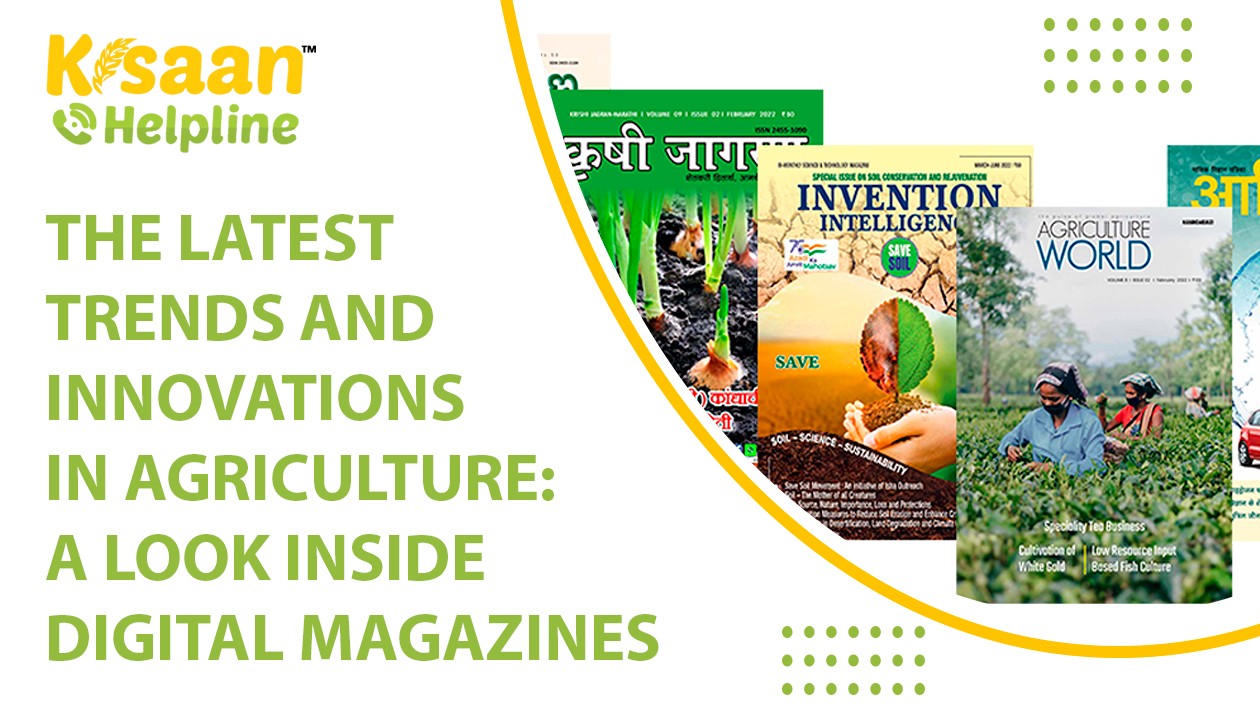
Digital magazines for agriculture are online periodicals that concentrate on issues pertaining to the sector. These publications typically cover a wide range of subjects, including crop production, livestock management, agricultural technology, business news, and legislative developments. For farmers, agricultural professionals, and anyone else interested in the industry, digital magazines for agriculture offer a convenient and accessible way to stay current on the industry's newest trends, innovations, and news. They frequently include case studies, interviews with industry leaders, and expert insights.


Digital magazines for agriculture can be interactive and entertaining in addition to being informative, and they can include multimedia content like videos, images, and infographics. Some publications even provide online communities and forums where readers can interact and exchange knowledge and experiences.


Overall, digital magazines for agriculture are a great resource for anyone trying to keep up with the most recent developments in this important sector.


Is digital the newest media king in agriculture?


Clearly tech-savvy, farmers use smartphones. They are also using technology to collect information on agricultural products and services. According to a 2015 survey by Successful Farming, farmers use mobile websites and applications to access agricultural information 46% of the time on average. The percentage increased to 68% for web pages viewed on desktop computers and to 72% for agricultural e-newsletters. Even though these numbers are impressive for a market that was once thought to be low-tech, they pale in comparison to more traditional media.


Benefits of Magazine Digitization


1) Lower Costs: Paper magazines must be printed, distributed, and then sold by newsagents. Each of these three procedures is, of course, cost-effective. Additionally, the publisher loses money on unsold magazine copies. Publishing companies can now distribute their publications online thanks to digital technology without having to pay for the commercial mediation of suppliers and sellers.


Of course, changing the business model requires spending money. The money you save by reducing the distribution may initially turn out to be entirely spent on setting up the new arrangement, including the cost of the software and the hiring of your team. But you'll soon see that the expenditure was worthwhile.


2) Global Distribution: Another advantage is that publishers no longer have to pay distributors and can be sure that their magazine will be distributed globally. Online, there are no geographic limitations. Anyone, anywhere in the world, may purchase each issue of a magazine. This suggests that sales of the copies will probably increase, bringing in more money for the company.


Even better, it's not just a money problem; branding and marketing are equally significant. the basis for a well-known, powerful, and financially successful brand that can rely on word-of-mouth advertising and the capability to distribute the magazine globally.


3) Virality: With the introduction of Web 2.0, there are now completely new ways to communicate with customers, companies, and the general public. Businesses have a tonne of opportunities, and almost everyone is starting to use social media to expand their audience and accomplish their objectives. No publisher today can envision success without incorporating social media into their plan. You might be able to find your audience and increase the number of people who share your content by using social media sites like Facebook, Twitter, Instagram, and Pinterest.


Digital word-of-mouth marketing is essentially everything. Your customers will like and share your article, video, or photo if you produce a high-quality product, which will raise the visibility of your post.


4) Reader interaction: Readers engage in private messaging, comments, and likes on social media platforms. However, they also get in touch with your company in the same way. You have a great chance to hear what your audience has to say because of this. Did they like your most recent book or essay? Do they share your opinion or not? Can you elicit conversation from your readers?


You can assess whether your magazine is moving in the right direction by answering each of these questions. Even though selling printed copies of a magazine might produce the same outcome, you wouldn't fully understand why people liked or disliked it.


5) Interactive media: In addition to the advertising, the editorial in your magazine will seem lively, interactive, and interesting. Of course, graphics and photos can be included in printed publications, but websites can also feature videos. This approach allows for the entertaining delivery of news, greatly enhancing usability and the user experience. Additionally, live streaming enables publishers to communicate with their audience directly rather than having to print and distribute their content through kiosks or other distribution channels.


To instruct viewers on how to complete tasks, you can create video lessons. For example, a cooking magazine might do well to offer videos that show how to make a cake.


6) Analyses: It's impossible to determine how many print magazines were read, by whom, or where, even though you may have an idea of how many print magazines you sold.


Analytics insights are used by digital magazines to better understand reader engagement. You can see the most well-liked content categories, the origins of your readers, the pages they spend the most time on, and the points at which they stop reading your magazine. All of which provide a useful way to gradually increase advertising rates and can be used to enhance subsequent editions.


7) Sustainability: A magazine requires a significant amount of energy and resources to produce and recycle. One sheet of paper requires 3 gallons of water to produce. Printing isn't always the most environmentally friendly and sustainable channel, especially when you factor in the carbon footprint of distribution, waste, and printing presses.


You can convert a portion of your audience to a more sustainable medium by using digital. At YUDU, we use Amazon Web Services to deliver digital magazine content to our publishers (AWS). who are dedicated to minimising environmental impact through the use of renewable energy in conjunction with a global sustainability strategy.


8) Updates are simple: Once something is printed, it cannot be changed once it has been put on paper. the occasion when I wore double denim. With digital, mistakes can be magically erased with the click of a button, as if they never occurred.


There is no need for print run waste or magazine recalls. Additionally, changes you make are immediately available and can be distributed to devices to replace inaccurate digital editions.


9) Archives: Before computers, you had to sift through pages and pages of content to find what you were looking for (I FEEL OLD).If you were wealthy, your butler or personal assistant would take care of it for you.


Today's digital magazine software enables readers to look up specific search terms in your publications; this is beneficial for publishers of academic content in particular. Asking Jeeves wouldn't even be necessary.


10) Sharing: About six years ago, I loaned a book to someone. I never received it back; it still irks me. Whatever the case, with digital magazine publishing, your readers can share content (you can control how—screenshot, page, full edition) to support audience growth.


Benefits of digital farming magazines


Information Access: Farmers have access to information on the newest trends and developments in agriculture, such as crop management strategies, pest and disease management, and new agricultural technologies, thanks to digital magazines.


Cost-effective: Digital magazines frequently cost less to produce than print magazines, which is advantageous for farmers who may be on a tight budget.


Convenience: Farmers who may not have easy access to print publications or who need to access information while in the field will find digital magazines convenient because they can be accessed from anywhere at any time.


Interactive: interactive elements in digital magazines, like videos, animations, and infographics, can make difficult-to-understand agricultural concepts simpler.


Timely: Farmers can keep up with the most recent news and developments in the industry in real-time thanks to the speedy publication and distribution of digital magazines.


Networking: Some digital magazines for agriculture might also provide online communities and forums where farmers can interact, exchange information and stories, and pose queries.


Concerning Kisaan Helpline


Rural communities can increase the productivity and sustainability of their agricultural operations with the aid of Kisaan Helpline, one of India's top websites for agricultural service providers. We encourage farmers to become more incorporated, connected, and knowledgeable. We give you specialised knowledge that lasts until post-harvesting, from soil preparation, seeding, and sowing to plant nutrition and protection. We are India's leading provider of agricultural services, assisting you in making decisions regarding your farm, improving performance, predicting upcoming events, and acting more successfully as anticipated.


Kisaan Helpline provides a selection of e-magazines in a number of languages to assist farmers in learning more about farming.


To sum up


There is a lot of potential for improving agricultural lives with digital applications. The government must change the current rules to make Indian agriculture more market-oriented while also fostering favourable conditions for technological innovation. The rural connection is essential for providing knowledge and low-cost data access. Farmers will be able to increase their profitability, and young people in rural areas will be able to realise their full potential if they have access to fair markets.


Kisaan Helpline is a committed and dedicated digital platform that works to improve farmer livelihoods and support sustainable agriculture. We are happy to answer any questions you may have.

Tuesday, 21 February 2023

Which application is most suitable for the agricultural industry?


Daily tasks in the agriculture sector include managing crops, harvesting, producing, and using farmland, machinery, seeds, and fertilizers. One traditional industry that requires the most cutting-edge technologies to be modernized is farming. The agricultural sector is aware of the necessity of introducing technological innovation to benefit its farmers. Farming companies now have to take advantage of mobile app development's advantages due to increased mobility, the transfer of various types of data, and an increase in IoT-connected devices.


Farmers are gradually adjusting to managing processes using cutting-edge technology. Land management, crop quality, horticulture, weather forecasting, soil quality, and fertiliser use are the main components of these activities. Mobile apps can have a big impact on farmers by enabling operational ease and accessibility as a number of next-generation technologies, such as AI, AR/VR, and blockchain, enter the market.


What effects has the world of mobile communications technology seen?


The most popular method for transmitting data, voice, and various services in use today is mobility, which has grown quickly. Due to the exponentially high rate of growth in mobile device use, businesses are starting to look into how they can make the most of mobile technology to grow their operations. Using apps is undoubtedly the best way to provide clients with information and services. The use of mobile applications enables businesses to more effectively and individually reach a larger audience. Mobility has completely changed every industry, from retail to banking to healthcare, and it is now moving towards the agricultural sector as well.


Are mobile apps the most suitable technology for today's agricultural industry?


Some recent studies make it crystal clear who uses which service and what the users' needs are. The creators of mobile applications are figuring out how a specific service will fit into the lives of farmers. As a result, they are creating apps with services that will be extremely helpful to farmers. One of the examples is the pricing data for various markets; if an app is able to offer this data, then it will undoubtedly be extremely beneficial for the farmers to know about the best market.


How Do Smartphone Apps Help Farmers?


1) Weather prediction


Farmers who work in agriculture depend on their ability to predict the weather to help them secure their crops and make better decisions. Some technologies can also develop features like crop disease analysis. Additionally, farmers can get the necessary treatment for sick or ill crops by consulting specialists and experts. By allowing users to video call one another from anywhere at any time, a mobile app can easily overcome these difficulties. These apps can also identify, classify, process, and send images to the labs using AI and ML to identify diseased crops. Additionally, brightness analysis is made possible by mobile technologies, which aid in determining how much light is intercepted by plants.


2) Transparency and traceability


In order to properly address the serious problem of food safety, the supply chain needs to be streamlined, and ineffective processes need to be eliminated. From the farm to the market, it is essential to ensure that the production and supply processes run smoothly. Blockchain development services make it possible to pinpoint the precise sources from which the food is sourced, streamlining such processes. Additionally, it becomes possible to pinpoint the locations of the food's production, processing, and harvesting. It aids in the elimination of fraud involving phony labels and middlemen. It may even do away with the requirement for prior trust in business dealings with other companies.


3. Information on Crops


The focus of crop information is on soil analysis, water management, and readiness for harvest or production. Mobile apps can collect soil information from a variety of sources, which can improve the precision of farming operations. Based on the geographical locations, it includes analysing the soil's colour, pH level, carbon content, climate, and elevation. In addition, it can aid in the evaluation of water quality, level, clarity, obstructions in the river's course, temperature, and algae growth before the water reaches the crops. These analysis methods aid in determining the amount of water that crops need based on factors such as plant type, climatic variations, seasons, and growth stages. By calculating the necessary water supply, farmers can compensate for water loss and grow crops according to their own needs.


4) Management of Farms and Land


One of the most important processes in farm management is the identification of any impending diseases, their prevention, as well as the application of pesticides and fertilizers. Smartphone applications can help farmers effectively manage all of these resources, which will ultimately boost productivity. The ability to record every piece of land data from anywhere using mobile apps is the biggest benefit for farmers. It does away with the need to maintain paper-based records and reports of things like locations used, types of weeds and diseases, types of pesticides and fertilisers used, etc. By keeping a digital farm journal, they can easily record field data and manage resources. Additionally, it enables them to compile geo-data on cultivable land areas, which can be very useful to monitor the outcome and make accurate decisions.


Kisaan Helpline: What is it?


India's farmers can get assistance and information from the mobile app Kisan Helpline. It aims to assist farmers in enhancing their agricultural practices, gaining access to government programmes and benefits, staying informed about crop market prices, and connecting with experts for advice and direction. The app offers a number of services, such as weather reports, news, and updates, as well as a forum for farmers to express their concerns and make contact with the appropriate authorities. By giving farmers the tools and knowledge they need for success, Kisan Helpline aims to empower them and improve their standard of living.


How does the Kisaan Helpline benefit farmers?


Farmers can benefit from the Kisan Helpline because it offers them a wealth of agricultural information and support. This includes having access to government programmes, weather data, crop market prices, professional guidance on farming and agricultural practises, and much more. This can assist farmers in making wise decisions, enhancing their farming methods, and ultimately raising their income. The app also gives farmers a forum to express their issues and get in touch with the proper authorities, enabling them to stay informed about recent developments in their industry and deal with any problems they may be having.


Why Should You Go With Us?


1) Research Data


For the most recent update, we had a strong research team. KH maintains data going back years to assist farmers in resolving problems with crop management.


2) Innovation


Our upcoming AI will be accessible to farmers around-the-clock. Farming requires innovation, and we are enthusiastic innovators.


3) Assistance and live support


Using Salah and Samadhan is a special method for answering farmers' questions.


What makes Kisaan Helpline (KH) unique?


1) Agriculture news: Farmers require information specific to their industry and are interested in learning about the current state of farming. As a result, we regularly update news and ideas on the Kisaan Helpline portal. We publish the news in both Hindi and English so that farmers can easily read and comprehend it. We're attempting to make it compatible with all regional tongues. We have a very strong new system that benefits from agricultural informatics.


2) Market price (mandi rate): Farmers are constantly curious about the crop's value in the market (mandi rate). We are giving farmers the best option because they always want to get the best price for the crop. Farmers can access the current market price on a daily basis in our portal.


3) Agriculture Training: Kisaan Helpline's agriculture training programme aims to educate farmers. We oversee a highly desirable platform for farmers. We have arranged every type of agriculture training programme in this section. The user can learn about every aspect of agriculture. Because farming is such a vast and profitable industry, we are developing a programme that is both appealing to and appropriate for farmers. From here, they can learn precise information.


4) Suggestion and Solution: Farmers need to communicate their problems, issues, questions, and suggestions, but they are unsure of how to do so. Farmers can ask any questions in this section with ease, and our knowledgeable team will respond to all inquiries. This serves as a system of support. Farmers can receive a precise answer in a timely manner.


5) Technique used in farming: When farmers use the incorrect technique, they are unable to produce crops that meet their expectations in terms of quality and are therefore unable to charge a fair price for them. Therefore, the expert team at Kisaan Helpline will give you the best farming technique. Farmers can easily obtain accurate information about farming methods. Our experts will give you the best advice and information.


6) Digital magazine: Kisaan Helpline also offers a section of digital magazines to help farmers advance their knowledge. Farmers can read our online digital magazine after following the strategy of the traditional farming method to improve their farming operations. We have a very unique assortment of extremely rare magazines, which are unavailable online or in physical stores. Digital magazines are easily accessible to farmers. The farming method is very well supported by digital magazines. For your benefit, our knowledgeable agro-scientists also advise doing this.


To sum up


The app offers a variety of services and resources specifically designed for the agriculture industry, such as details on government initiatives, current market rates, and professional counsel. Kisaan Helpline is a comprehensive and easily accessible source of assistance for the farming community and also provides a forum for farmers to communicate with pertinent authorities and voice their concerns.


It is crucial to keep in mind that each farmer will experience the Kisan Helpline differently, and the best choice for one farmer might not be the best choice for another. When selecting a resource or support system, farmers should take into account their unique needs and preferences. They may want to experiment with different options in our application to find the one that best suits their needs.

What resources are available for information on agricultural fairs?


Agricultural fairs are neighbourhood gatherings that honour the long history of farming and the rural way of life. These fairs give farmers, ranchers, and rural communities a chance to showcase their accomplishments and educate the general public. They typically take place once a year and offer a wide variety of activities and events that showcase the best aspects of rural culture and life.


You can anticipate seeing displays of farm products like fruits, vegetables, grains, and livestock at an agricultural fair. These events frequently include competitions like crop exhibits and livestock judging. Farmers can participate in these competitions to display the quality of their livestock and crops and to be honored for their commitment to the land.


Why do agricultural fairs matter so much?


The best part of agricultural fairs is seeing the work that our neighbors produce, whether it be crafts or poultry. It gives us a chance to admire one another's exhibits and recognise the talents of our neighbors. Unfortunately, there has been a decline in exhibitors across the board over the years. For some reason, community members are no longer featured in exhibits. Coming to the fair to see these fantastic exhibits is what members of our neighborhood do. If we don't have excellent exhibits, the fair will eventually become obsolete. Our incredible neighbors must emerge from hiding to demonstrate their knowledge of agriculture.


Farmers in India benefit greatly from agricultural fairs because they offer them many advantages and opportunities. The following are some of the most significant effects that agricultural fairs have on Indian farmers:


1) Networking and Information Exchange: Farmers can connect with one another and exchange experiences, information, and ideas at agricultural fairs. Farmers can pick up tips from other farmers, talk about the newest farming methods and technologies, and gain knowledge of new markets and business opportunities.

2) Access to New Products and Technologies: Farmers looking to enhance their operations and boost yields can benefit from the demonstrations and exhibitions of new products and technologies that are frequently featured at agricultural fairs. Farmers have the chance to learn about the most recent developments in agriculture and to see the products and technologies in action at these exhibitions.

3) Market Possibilities: Agricultural fairs give suppliers, buyers, and traders easy access. Farmers can promote their goods, establish connections with potential customers, and create new market opportunities.

4) Recognition and Prestige: Farmers can exhibit the calibre of their livestock and crops through competitions at agricultural fairs, which frequently include livestock judging and crop exhibits. Winning these contests can boost the farmer's reputation and boost the value of their farm, bringing in more customers.

5) Education and Training: Farmers can attend workshops, seminars, and training sessions at agricultural fairs on a variety of subjects, from the newest farming methods to business administration and marketing. These educational opportunities can aid farmers in developing their abilities and knowledge as well as keeping abreast of the most recent advancements in the agricultural industry.


Employment and Economic Growth: A Relationship


The amount of employment in a nation is significantly influenced by its level of development. Therefore, employment opportunities increase as a nation develops and its production rises. Production has increased in all economic sectors in India over the last 30 years or so. However, unemployment has gone up in absolute terms over the course of the planning period. This occurred as a result of the trend rate of growth being significantly lower than the targeted rate during the first three decades of economic planning. As a result, not enough jobs were generated. Additionally, economic expansion cannot end unemployment on its own.


Fairs and festivals' value to rural development and agriculture


Animators of static attractions, catalysts for other developments, and attractions themselves, festivals, and special events are known to play significant roles in destination development. Festivals and special events also extend the destination's tourist season, offer cultural and educational opportunities, foster a sense of community pride, aid in the conservation of sensitive natural, social, and cultural environments, and support sustainable development in addition to the economic benefits that they bring. One of the tourism sectors with the fastest growth is event and festival tourism.


It is gaining popularity as a means of reviving local economies in rural areas. In regions that were previously dependent on traditional industries like farming or narrowly focused tourism industries, the need for industry diversification has been prompted by developing technologies and changing weather patterns (i.e., an increase in droughts and floods/storms). Many of these places have used events and festivals to draw tourists who would otherwise avoid regions with a seasonal tourist appeal.


The International Festival and Event Association (IFEA) conducted a survey, which estimated that the special events industry includes between 4 and 5 million regularly occurring events and has a sizable economic impact on the world.


Regarding the Kisaan Helpline


A dedicated platform (for the agricultural supply chain) called Kisaan Helpline offers farmers one-stop information. Other agricultural information available to farmers includes soil testing, training, crop protection, crop nutrition, seeds, agricultural news, articles, advice from agricultural experts, and solutions. On the Agro Expert Forum of the Helpline, farmers can offer suggestions, solutions, articles, their opinions, and agricultural information pertaining to crop protection. The goal of the Kisan Helpline is to encourage agricultural consultants and experts to share their knowledge with others while also keeping their opinions to themselves. This will aid in guiding farmers by promoting their concepts, articles, and agricultural knowledge.


What part does the Kisaan Helpline play in agricultural events?


Although Kisaan Helpline is not directly involved in planning or running agricultural events, it can support farmers who are taking part in them.


For instance, farmers can access information on the most recent agricultural technologies and practices through the Kisan Helpline, which can be helpful for getting ready for and taking part in agricultural events. Additionally, they can use the helpline to speak with experts and receive guidance on a variety of agricultural topics, including crop choice, soil management, and livestock care.


Additionally, the Kisan Helpline can inform farmers about government agricultural programmes and policies, which can help them navigate the various rules and requirements related to agricultural events.


Conclusion


Farmers in India can get information, support, and direction from the Kisan Helpline on a variety of topics related to agriculture. The Kisan Helpline can be a helpful resource for farmers who are looking for information on the most recent agricultural technologies and practices or who need guidance on government programmes and policies pertaining to agriculture. The Kisan Helpline gives farmers a direct line of communication with the government, enabling them to succeed and thrive in their careers. This programme demonstrates the Indian government's dedication to advancing agriculture and ensuring the welfare of its farmers.


By giving out prizes for their produce at the conclusion of the event, farmers are encouraged. It serves as a common forum for farmers, scientists, and organisational entities to share knowledge and experiences regarding contemporary agricultural technologies. Farmers' fairs offer an affordable way to spread knowledge through demonstrations, farmer feedback, and the most convincing interactions between farmers and scientists. Additionally, it provides a venue for the sale of agricultural goods and inputs, as well as for the display of cutting-edge agricultural and related technology.

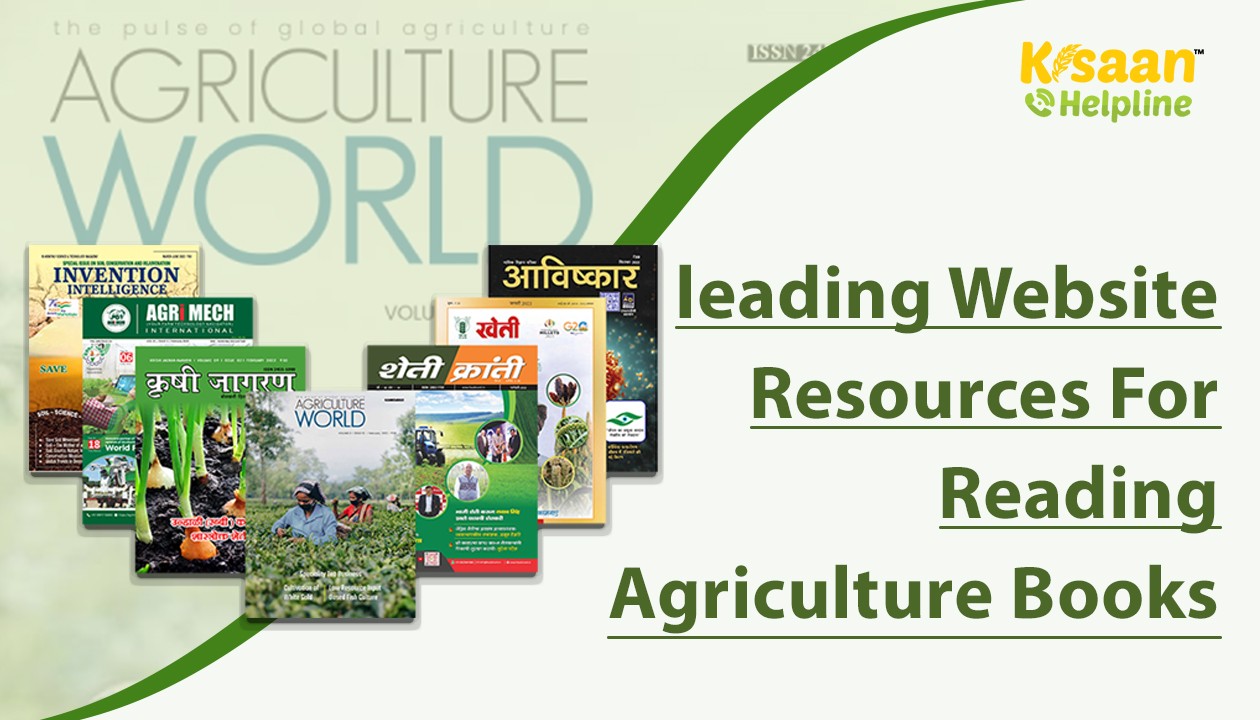
Leading website resources for reading agricultural books


The use of computers and other electronic devices in farming and other agricultural activities is referred to as "digital agriculture". Through the use of cutting-edge technologies integrated into a single system, digital agriculture enables farmers and other participants in the agriculture value chain to increase food production.


What are digital books in agriculture?


A variety of topics related to agriculture are covered in digital agricultural books, which are electronic versions of traditional printed books. They are made to give farmers, students, researchers, and other people working in agriculture information and resources. These books are available online and frequently have interactive elements that help readers comprehend difficult subjects, such as videos, animations, and simulations. Numerous subjects, such as crop management, animal husbandry, sustainable agriculture, and agribusiness, can be covered in digital agricultural books. They can also be updated in real-time, guaranteeing that users have access to the most recent data and agricultural research.


For farmers, digital agricultural books can have a number of advantages:


1) Convenient access to information: Information is more easily accessible to farmers thanks to the availability of digital agricultural books from any location with an internet connection.

2) Current information: Since digital books can be updated instantly, farmers will always have access to the most recent knowledge and analysis in their field.

3) Cost-effective: Digital agricultural books can be updated more easily and are frequently less expensive than printed books, which eliminates the need for pricey new editions.

4) Better decision-making: Farmers who use digital agricultural books to research industry trends, new technologies, and best practices can make more informed choices about their farming operations.

5) Enhanced learning and training opportunities: Interactive elements found in digital agricultural books like videos, animations, and simulations can help farmers better understand complex subjects and develop their general knowledge and skills.

6) Enhanced productivity: Digital books can give farmers simple-to-use tools, like calculators, that can help them organise their processes and boost productivity.


Kisaan Helpline: Who We Are


We are a committed digital platform working to enhance farmer livelihoods and support sustainable agriculture. Kisaan Helpline, one of India's top portals for agricultural service providers, helps rural communities improve the productivity and sustainability of their agricultural operations. We support farmers in becoming more integrated, connected, and knowledgeable than ever. From land preparation, seeding, and sowing to plant nutrition and protection, we provide you with specialised knowledge that lasts through post-harvesting. We are the top agricultural service provider in India, assisting you in decision-making on the farm, enhancing performance, forecasting future events, and acting more successfully as predicted.


Agriculture Magazine


For the purpose of upgrading and advancing agricultural technology, farmers are still conducting their business in the same manner as they have always done. However, it necessitates a thorough understanding of cutting-edge agriculture technology. With the help of our agriculture magazine, farmers can learn all the crucial details about farming. It provides a summary of daily events in agricultural society. When it comes to the newest farming techniques and trends, our expert conducts research and analysis before contributing the pertinent information to Agriculture Magazine. Agriculture Magazine in Hindi and Agriculture e-Magazine are the most efficient ways to obtain additional useful information about agriculture.


Our goal is to educate people on the newest trends and technologies being used in the development of agriculture, such as why chemicals and pesticides are inappropriate for farming, why adopting a healthy lifestyle is important, what materials should be used in farming, how it will benefit them in the long run, etc.


Farmers share their best farming experiences and conventional wisdom in the agriculture magazine, which helps advance the industry. Information in our magazine is based on actual research and experience, so it will lead you in the right direction. So read our magazine to broaden your knowledge and experience while learning about the best agricultural practices.


Hindi-language agriculture magazines


The best resource for learning about agricultural technologies in Hindi is an agriculture magazine. It will guide you through all of the most recent information, such as new agricultural trends, best farming practices, current farmer issues, and so on.


Many farmers and people working in the agriculture industry value the excellent content in our Hindi agriculture magazine. Through the Hindi edition of Agriculture Magazine, farmers can access important agricultural information. Our authors offer pertinent information that enables farmers to practice agriculture successfully and with ease. For more information about the magazine subscriptions, please get in touch with us.


Agriculture E-Magazine


Everyone wants to access useful agricultural information online, as the latest technologies in agriculture are changing the way we farm. Therefore, we are introducing a new service in the form of an agriculture e-magazine, from which you can access information about agriculture online, wherever you are. Because you can't always take a magazine with you, we simplify this process for our readers with the help of our beautifully designed Agriculture E-Magazine, which is identical to the original magazine but has countless advantages, including the ability to access all the necessary information from anywhere at any time and an increased ability for people to stay connected to emerging trends and technology.


Bottom Line


In conclusion, farmers can greatly benefit from digital agricultural magazines offered through the Kisaan Helpline platform by giving them access to the most recent data, tools, and resources. Farmers can improve their knowledge and skills, make better decisions, and increase their overall efficiency by making this information easily accessible through digital means.


Additionally, digital agricultural magazines can be economical, eco-friendly, and simple to update, which makes them an invaluable resource for farmers and the agriculture sector as a whole. Offering digital agricultural magazines via the Kisaan Helpline platform can be a significant step in assisting the expansion and development of the agriculture industry as well as enhancing farmers' quality of life.